Looking for a really cool and practical science experiment for kids? Your kids will be wowed and amazed at this how to make a battery for school project! This battery projects is a great introduction to electricity for kids and only uses a couple simple materials to allow children to understand how batteries work. This homemade battery project is perfect for first grade, 2nd grade, 3rd grade, 4th grade, 5th grade, and 6th graders too.

how to make a battery for school project
Are you on the lookout for a fun and educational science experiment that will enchant your kids? Look no further! This homemade battery project is not only simple to make but also an exciting way for your children to learn about electricity and how batteries function. Using just a few everyday materials, your little scientists will be amazed to see their own DIY batteries in action!
This experiment typically involves materials like a lemon or potato, copper coins, and galvanized nails. Kids will have a blast as they insert the copper and zinc electrodes into the fruit or vegetable and then connect wires to power up a small LED light. It’s a hands-on activity that makes learning about circuits and chemical reactions both accessible and enjoyable!
What makes this project even more awesome is that it’s adaptable for various age groups. Whether your child is in first grade, second grade, third grade, fourth grade, fifth grade, or even sixth grade, this experiment can be scaled to their understanding. You can encourage older kids to explore concepts like voltage and current, while younger ones can focus on the fun of seeing their battery work.
Plus, you’ll be encouraging problem-solving skills and creativity as they make predictions about how much power their battery might produce and what other materials they might experiment with.
So, if you’re ready to spark your child’s curiosity and introduce them to the fundamentals of electricity in a fun way, this homemade battery project is the perfect choice. Get ready for some amazed little faces and a great family learning experience!
We have lots more fun science experiments to choose from including more electricity experiments for kids, easy lemon clock, steady hand game using electricity, simple light bulb experiment, spinning Christmas science experiments, and 12 battery experiments for kids.
Electricity experiments for kids
Electricity is a form of energy that comes from charged particles. In nearly all electrical devices, negatively charged particles called electrons flow along a wire to create a current which is used to power the device. A wire that is not connected to a power source has no reason to create an electrical current. When batteries are connected within a circuit, electrons want to flow from the negative electrode (called the anode) to the positive electrode (called the cathode) creating the current that will power the load.
Within a battery, a separator is placed between anode and cathode to keep the electrons from flowing directly from one electrode to the other, forcing the electrons to flow along the external wire and power our devices. Another substance, called an electrolyte, is also placed between the anode and cathode. The electrolyte promotes the chemical reactions which will cause the anode to become negatively charged and the cathode to become positively charged. In this simple homemade experiment the anode is the aluminum foil, the cathode is the penny, the separator is the paper towel, and the electrolyte is the vinegar.
Disclaimer: As with any project, we encourage you to use common sense and recommend that you work under the supervision of a parent or teacher. Please remember that we cannot be held responsible for any advice provided.

battery projects
All you need are a few simple materials to try this homemade battery:
- Pennies (at least 5 if you would like to use your batteries to light up an LED)
- Aluminum foil (only a small amount, about a foot (~1/3 meter) of length is needed)
- Paper towels (about 1 square)
- Vinegar (I used distilled white vinegar, but the type is not important. Could also use lemon juice or salt water. You only need a small amount.)
- Duct tape
- LED (optional, but the activity is more fun if you have something to power. I used a green LED which only required 2 volts to light. Some LEDs may require more.)
- Alligator clips (optional, makes it easy to connect battery in a circuit, but could also use strips of aluminum foil instead. I only used 2.)
- Voltmeter (optional, but makes the activity more meaningful if the child can measure how much voltage their battery produces.)

homemade battery project
To make your homemade battery, first tear a square piece of aluminum foil about 3 inches (8 cm) per side. Exact dimensions are not important.
Fold the aluminum foil into a square about 1 inch (2.5 cm) on each side. Again, exact size is not important, but the square piece of aluminum foil should be a little bigger than a penny.

how to make a battery science project
Rip a piece of paper towel about the same size as the aluminum foil and fold it into a similarly sized square.

battery experiments for kids
Next, rip a piece of duct tape that is about the same width as the paper towel (or slightly bigger).

cool science experiments with batteries
Layer the penny, paper towel square, and aluminum foil squares on top of the duct tape. The penny should stick out from the duct tape slightly. Line up the paper towel with the duct tape edge on the penny side (and be completely covered on the other side). The aluminum foil should hang over the other end of the duct tape and should not touch the penny at all.

how to make a homemade battery
Fold over the duct tape to hold the 3 layers together to make your DIY Battery. The front and back of your battery should look like this: 
homemade battery
Finally, add a few drops of vinegar to the paper towel to act as the electrolyte. Your battery is complete.
If you have a voltmeter, connect the positive, red lead to the copper penny and the negative, black lead to the aluminum foil. Turn the dial to the lowest voltage setting. Your battery should measure in the vicinity of half a volt.

battery experiment
If you would like to light up an LED, you will need to make about 5 batteries. Depending on your particular LED, you may need more or fewer. 
battery science project
Connect your batteries in series by attaching the penny of one battery to the aluminum foil of the next with duct tape.

homemade battery science project
Use alligator clips to attach the ends of your battery series to the LED. Remember that an LED is directional. You will most likely need to attach the long leg of the LED to the penny end. Then attach the short leg to the aluminum foil, but if it does not work, try switching the leads.

how to make a battery
You can use your hands or some other heavy object (like a banana) to make sure all connections are firmly in place.

battery science experiments
How cool is that!









Popular Science Activities
Looking for lots more fun, science experiments for kids? You’ve GOT to try some of these outrageously fun science experiments for kids! Plus don’t miss all our science for kids, types of free science lessons, or seasonal science experiments.
- Tons of Kindergarten science experiments by month, How to Make a Lava Lamp, or POP rocks science experiment
- EASY Lemon Volcano, or 100 Amazing Food science experiments for kids (arranged by type of science), Dancing Raisins Experiment, or 19 Edible science experiments,
- Colorful Capillary action science experiment (also known as walking water), stunning Chromatography Flowers, colorful Oil and Water Science Experiment, or beautiful Color-Changing Flowers
- Magnet Experiments for Kids, amazing Magnetic Field Sensory Bottle, hands-on Science experiments with batteries, fun squishy circuits projects, and 30 Simple machines science projects
- 24 Epic Solar system science projects, HUGE Free Solar System Unit, Pipe Cleaner Constellation Activity, and simple Galaxy science project
- Why do Leaves Change Color Experiment, Leak Proof Bag Science Experiment with Everyday Materials, EPIC Mentos and Soda Experiment, and Mind-Blowing Magnetic Slime for Kids
- Fun Water balloon science experiment that explores density, 50 Fun Preschool science experiments, and Animal Classifications for Kids Cootie Catchers
- Weather Projects – how to make a weather vane and Air pressure science project
- Color Changing Slime, colorful bubble snakes, neat burning candle experiment worksheet answers, fun Lego Zipline, look INSIDE a Volcano Project, or Exploding Watermelon
- Human Heart for Kids, hands-on Human Body Project, Eye opening Eye science experiments, Life Size Skeletal system science project, free parts of the brain worksheet, and playdough human body game
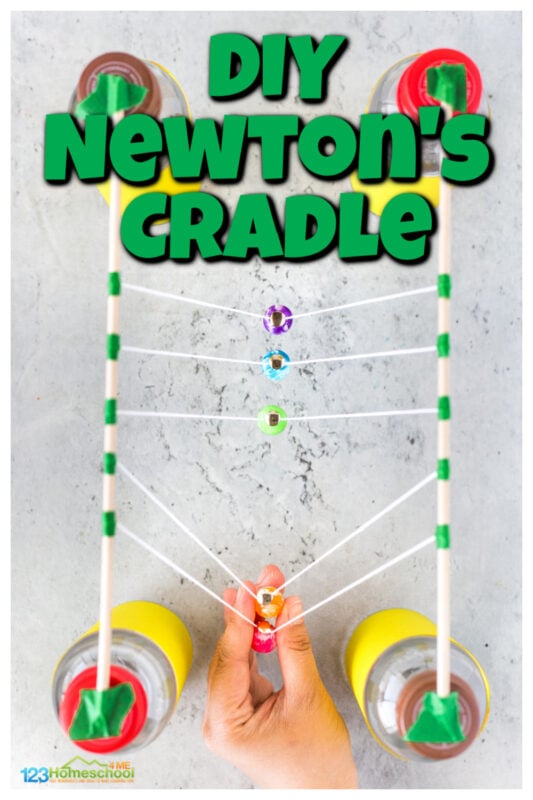
- Hands-on Newton’s cradle project, DIY draw bot for kids to make, LOTS of Life Cycles for Kids and 10 fun science experiments